Further Info
For further info on the conference program click.
Activating New Forms of Documentation and Critical Spatial Imagination: The Case of Shu’un Filastiniyya
7 September 2026
Curator, architect, and researcher Jumanah Abbas presents at the panel organized by Manazir at the 6th Swiss Congress on Art History
Jumanah Abbas presents “Activating New Forms of Documentation and Critical Spatial Imagination: The Case of Shu’un Filastiniyya” at the panel “The Archive as Imperative: Approaches in the History of Art and Architecture in the Middle East and North Africa”. The panel is organized by Manazir as part of the 6th Swiss Congress on Art History & the 50th Anniversary of the ASHHA.
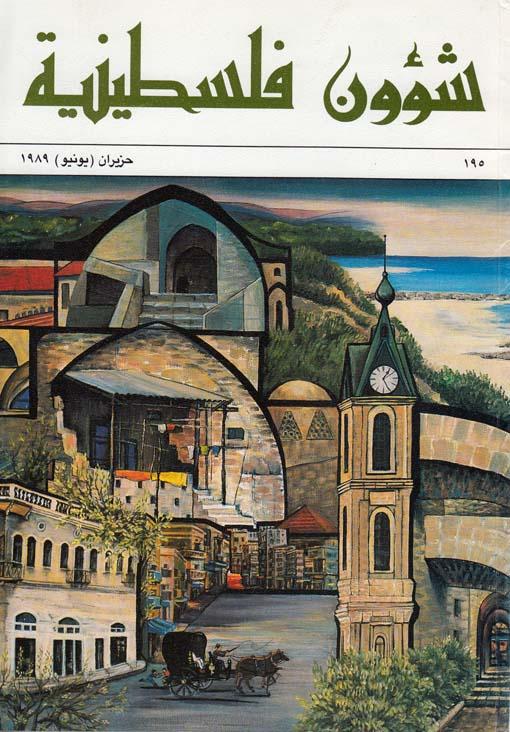
Palestinian Affairs (Shu’un Filastiniyya), a quarterly magazine issued by the Palestine Research Center in Beirut and spearheaded by the PLO, functioned as more than a cultural and political journal. It is an archive of some form – fragile, mobile, and deeply diasporic- which allowed Palestinian writers, poets, and artists such as Ghassan Kanafani, Elias Khoury, and Mahmoud Darwish to circulate voices otherwise threatened by censorship and erasure. Through its articles, autobiographies, and oral testimonies, the magazine documented experiences of displacement while simultaneously imagining liberated futures beyond the presence of the occupation forces.
Abbas’s paper focuses on an overlooked dimension of this archive: the magazine’s covers. Many were designed by Tamam Al Akhal (b. 1935, Jaffa; lives and works in Amman), who is widely known for her realist and impressionist canvases but whose work for Palestinian Affairs draws upon architectural techniques. Her sectional compositions—dividing façades, gates, and interiors— present Palestinian houses and towns both inside and outside at once. These images operate not only as illustrations but as windows into the architectural built environment, heritage and Palestinian ways of living.
Rather than presenting a panoramic history of Al Akhal’s artistic practice and the documented architecture, Abbas proposes to map these covers as potential archival trajectories. Following Gil Hochberg’s notion of Becoming Palestine, Abbas argues that to archive them is not simply to recognize the past but to extend a postcolonial critique in which the archive serves as a portal into imagined futures. By analyzing the covers’ visual-architectural language and their circulation within diasporic networks, this paper situates Palestinian Affairs as a performative archive—one that resists erasure, negotiates fragmented histories, and reimagines spatial belonging. Read this way, Palestinian Affairs covers reveals how archives in the MENA region perform beyond preservation: they activate new forms of documentation, circulation, and critical spatial imagination of an architecture that Palestinians once lived in, but now continue to live within.
Jumanah Abbas is an architect, curator, and researcher working at the intersection of spatial practice, critical geography, and contemporary art. Before joining Dubai Collection as an Associate Curator leading the curatorial strategies and vision, exhibitions and publications, she was an Assistant Curator on the Guggenheim Abu Dhabi Project supporting on Inaugural Collection Display Galleries and publications, long-term collection strategy, architecture and fellowship programming.